Product
Consumer App & API
A consumer app (iOS & Android) that pulled events in automatically from across the web, plus a B2B API powering clients' websites and listings.

Case study · Event Platform
Event discovery platform for France & Switzerland. Grew from an idea to 10M+ event views and 97% regional coverage, with 300K sign-ups in 48 hours before the app even launched.
Overview

Product
A consumer app (iOS & Android) that pulled events in automatically from across the web, plus a B2B API powering clients' websites and listings.
Team & context
Small, bootstrapped team with no outside funding. We wanted to become the one place people checked for local events, in a market that still ran on flyers and Facebook groups.
My Role
Led UX/UI design, iOS development, built scraping scripts, and owned growth strategies & B2B sales.
The opportunity
The problem
Local events were scattered across regional newspapers, social media pages, city websites, and paper flyers. Existing event directories were full of spam and outdated listings.
The starting point
We launched an early test in Grenoble. It confirmed that people wanted one reliable place to answer a simple question: what is happening around me this weekend?
The challenge
We had to automatically aggregate messy data from hundreds of sources into a clean database, design a fast mobile experience, and build a sustainable business model without relying on local ads.
Product design
A mobile application for discovery, backed by a structured event engine sold directly to regional media and transit clients.
User Onboarding
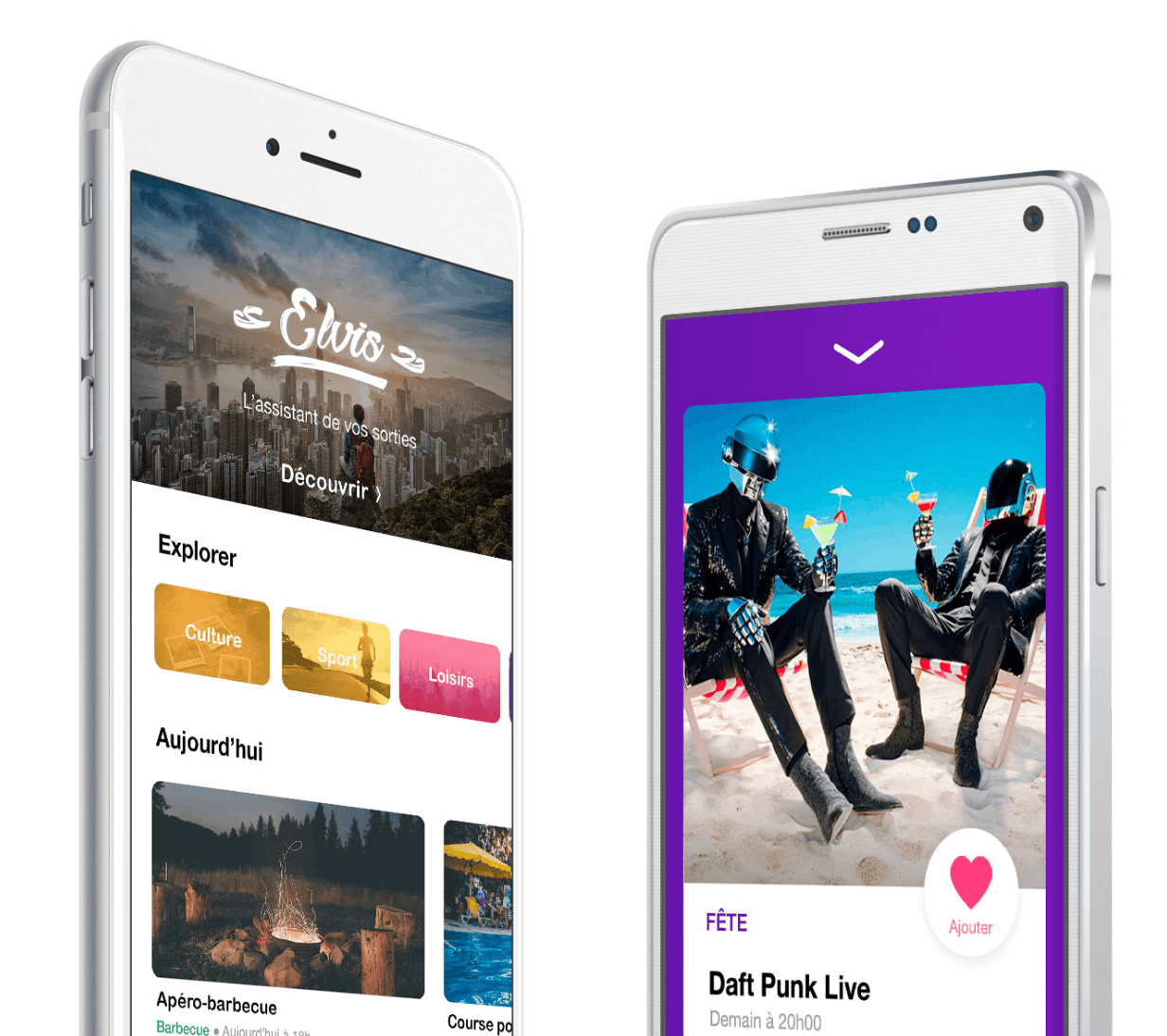
Users selected their city and a few interests to instantly receive personalized event recommendations.
Discovery
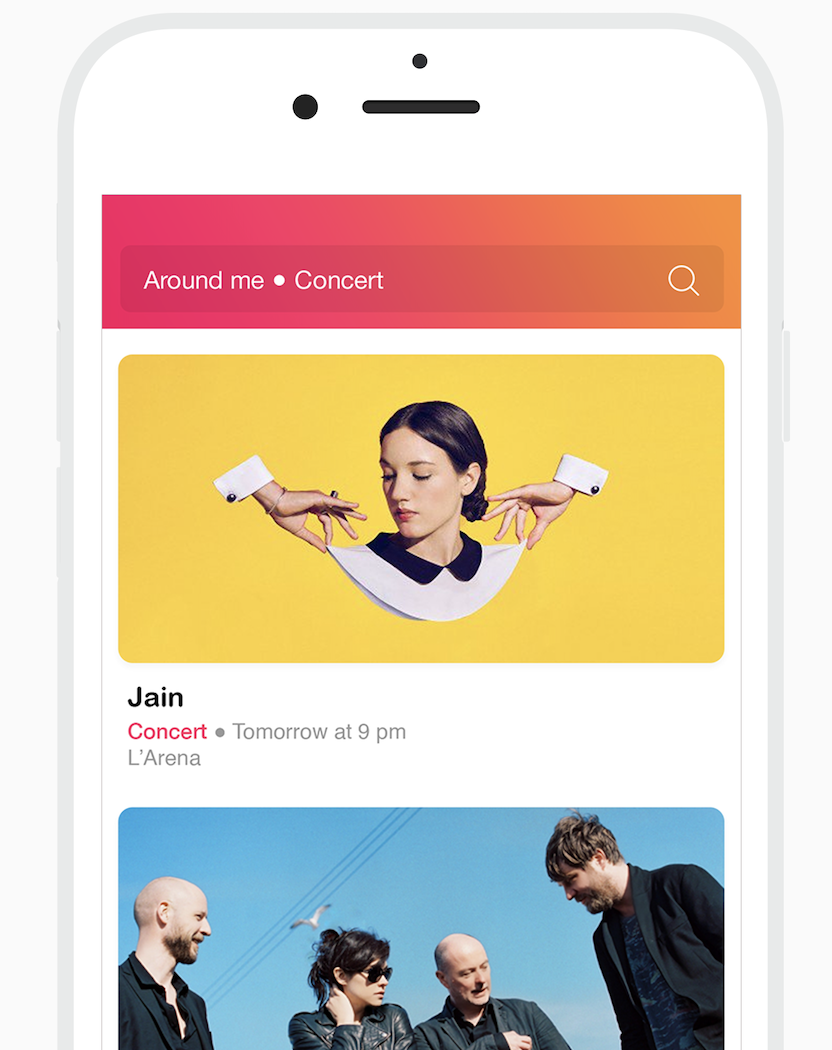
We replaced complex search filters with a simple personalized feed called Elvis. It prioritized upcoming events based on location, user habits, and weekly popularity.
Retention
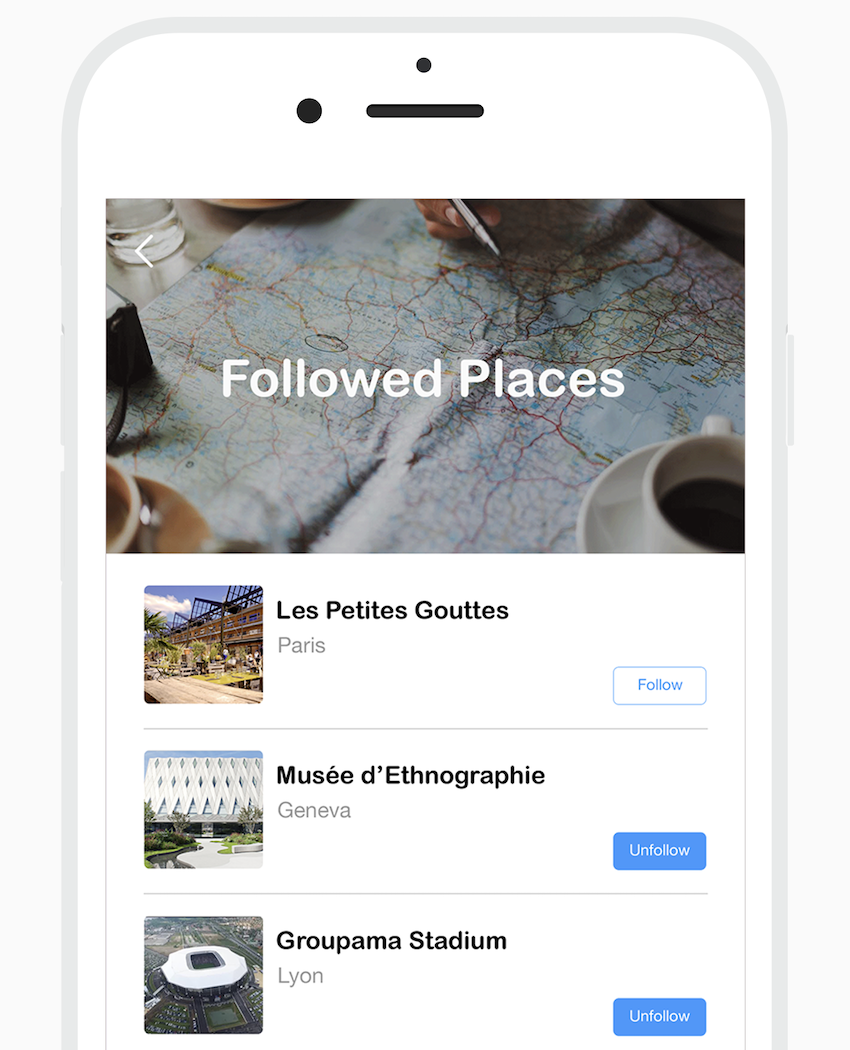
Users followed their favorite venues and received instant notifications when new events were announced, building a weekly habit.
B2B Infrastructure
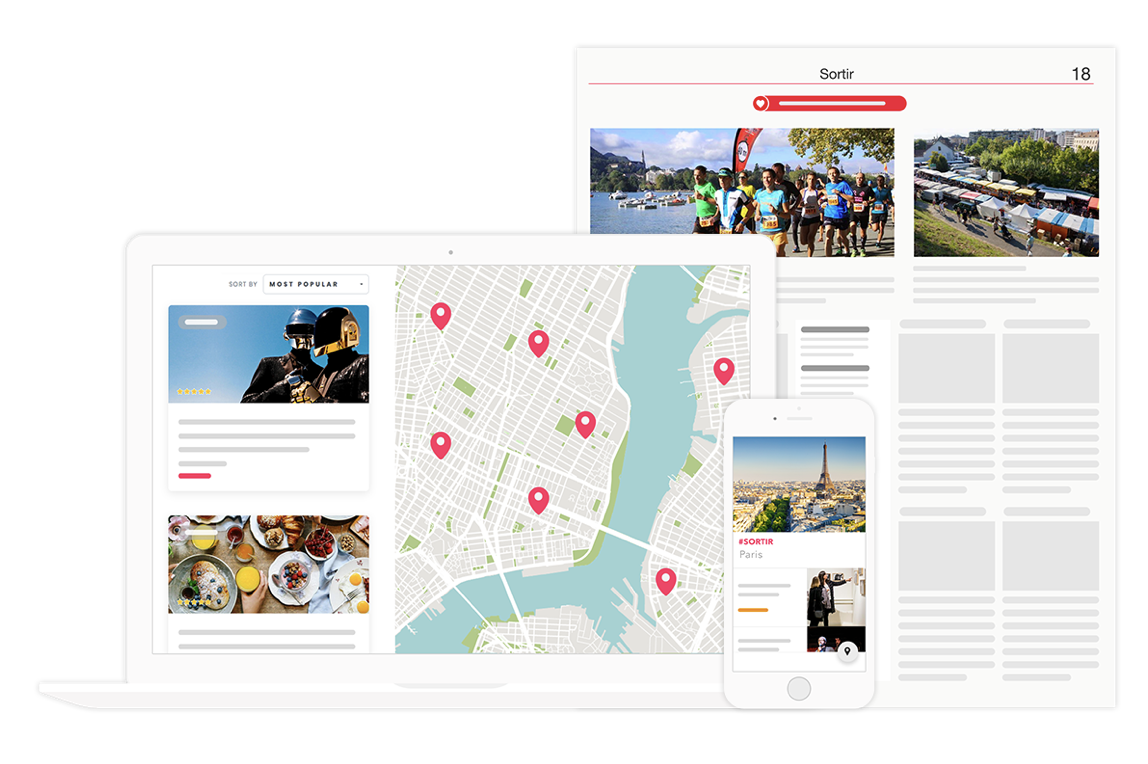
The same structured event database was offered as an API to regional newspapers and transport operators, powering their digital event listings and weekly print sections.
Key decisions
Automated Ingestion Pipeline
Rather than manual entry, we built custom scrapers and API integrations paired with algorithms for deduplication, quality filtering, and text normalization. This turned messy web data into a clean, uniform database with twice as many events as any competitor.
Replacing the map
User testing showed that people rarely explored interactive maps. They wanted a short, curated list. Switching to a simple feed increased weekly retention, peaking at a 90% active user ratio.
Business model pivot
Local ad revenue was too weak to sustain the business. When regional media companies asked to buy our event data, we pivoted to sell our structured database directly to corporate clients.
Experimentation
Before building the mobile app, I tested local interest using simple Facebook pages named for upcoming events in major French cities. Without spending money on ads, 300,000 people opted in across 30 cities in just 48 hours. This confirmed strong demand and gave us an instant audience on day one.
People poured in, posted their events, and tagged friends. In 48 hours, these simple pages generated 300,000 opt-ins across 30 cities entirely through word of mouth.
The rapid response confirmed real demand before writing a single line of application code. It gave us a live lab to observe user behavior and a launch pad for our app release.
Results
Event views
Delivered over 10 million event views with 97% regional coverage and twice as many listings as competing services.
Organic pre-launch sign-ups
Generated 300,000 pre-launch sign-ups across 30 cities with zero ad spend before the mobile app went live.
Media contracts
Signed contracts with major regional media groups and transit authorities to power their digital and print event guides.
Recognition
Won the Rhonexpress Innovative UX award and gained national media coverage in major outlets like 20 Minutes.
Retrospective
End of operations
In early 2020, as we were closing major media deals, COVID-19 shut down all physical events. As a bootstrapped company dependent on live events, waiting out the lockdown was impossible, so we made the call to shut down Flyerz.
Strong user engagement does not guarantee a viable business. Testing who will pay and why as early as possible prevents getting stuck in the wrong business model.
A clean, one-swipe feed outperformed interactive maps and complex search tools. Reducing user effort always wins.
Hitting 300,000 sign-ups proved initial interest, but not long term retention. Sustainable product value still requires deep focus on user habits and business model.
Our biggest value was not the mobile interface, but the structured event data behind it. Building robust infrastructure creates long term value.