Product
Training loop
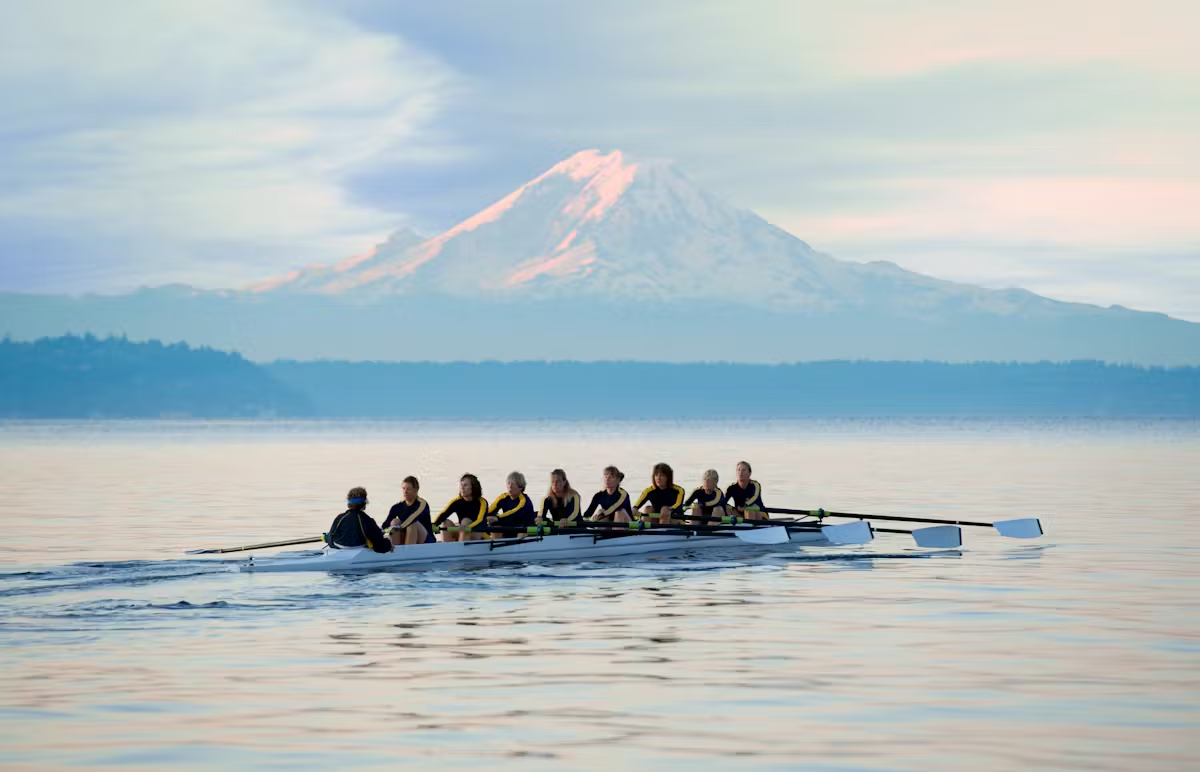
Set a goal, follow a structured plan, and adapt sessions based on real fatigue. Workouts are designed from elite coaching programs defined with Maxime Ducret.

Side build · Rowing app
A rowing app built from scratch in 25 hours with AI. Now used by 300+ rowers logging 1,000+ training sessions, with zero marketing.
Overview
Product
Set a goal, follow a structured plan, and adapt sessions based on real fatigue. Workouts are designed from elite coaching programs defined with Maxime Ducret.
Team & context
A side project built to test AI development tools (Cursor): how fast can one person go from idea to a working app.
My Role
Product strategy, UI/UX design, domain logic extraction with a coach, and full-stack implementation using Cursor, Supabase, and Vercel.
The opportunity
The problem
Runners and cyclists have dozens of training apps. Rowers do not. They repeat generic workouts on rowing machines without knowing if they are on track to reach their target times.
The challenge
We had to turn elite coaching principles into a digital training engine that gives rowers structured guidance while adapting flexibly to real world fatigue.
Product loop
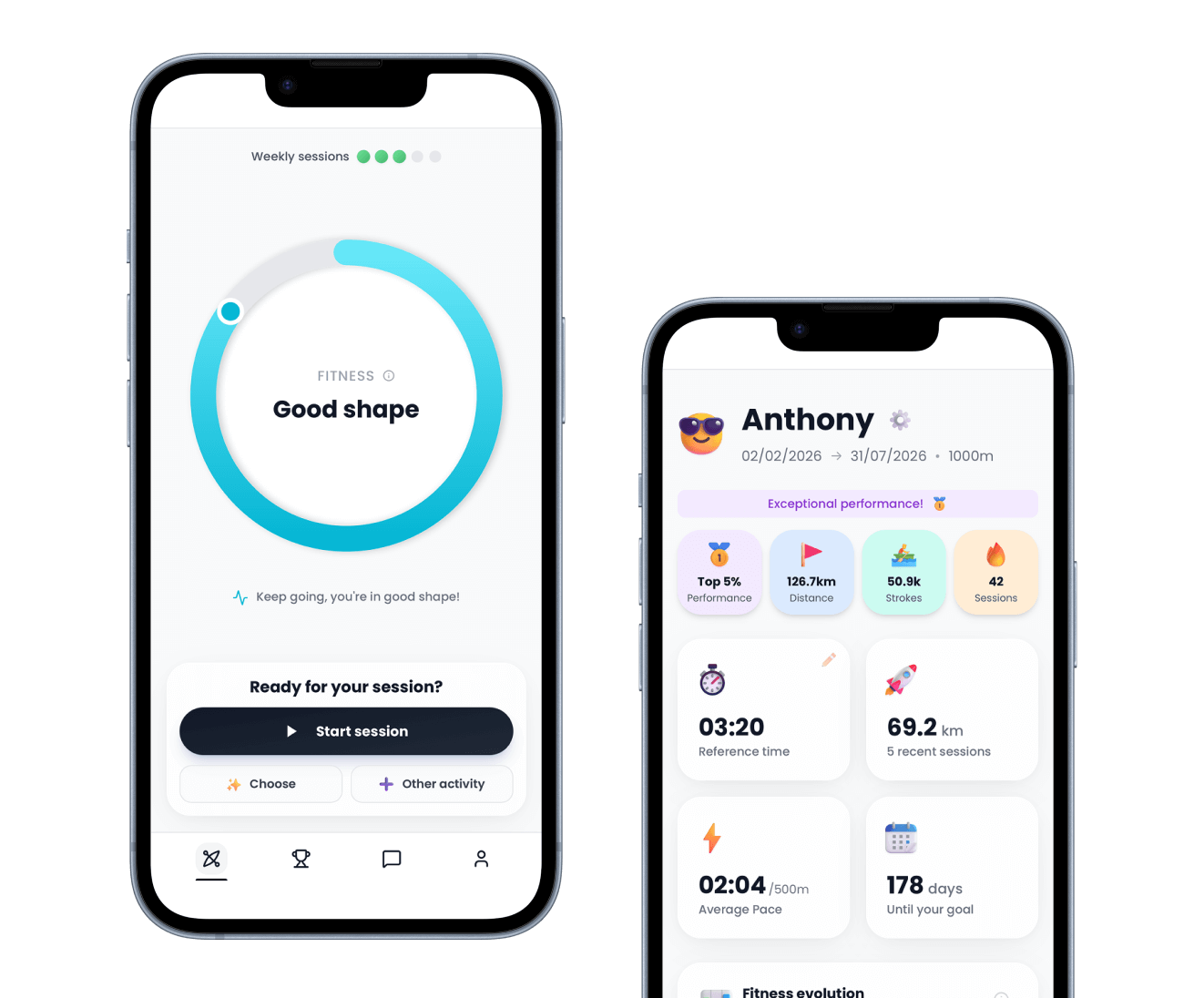
Set a target, follow a tailored training plan, and let your actual state of recovery dictate your next workout.
Intention
Choose a target distance from 500 meters to 6,000 meters, enter your current time, and pick a race date. The app calculates a realistic target.
Programming
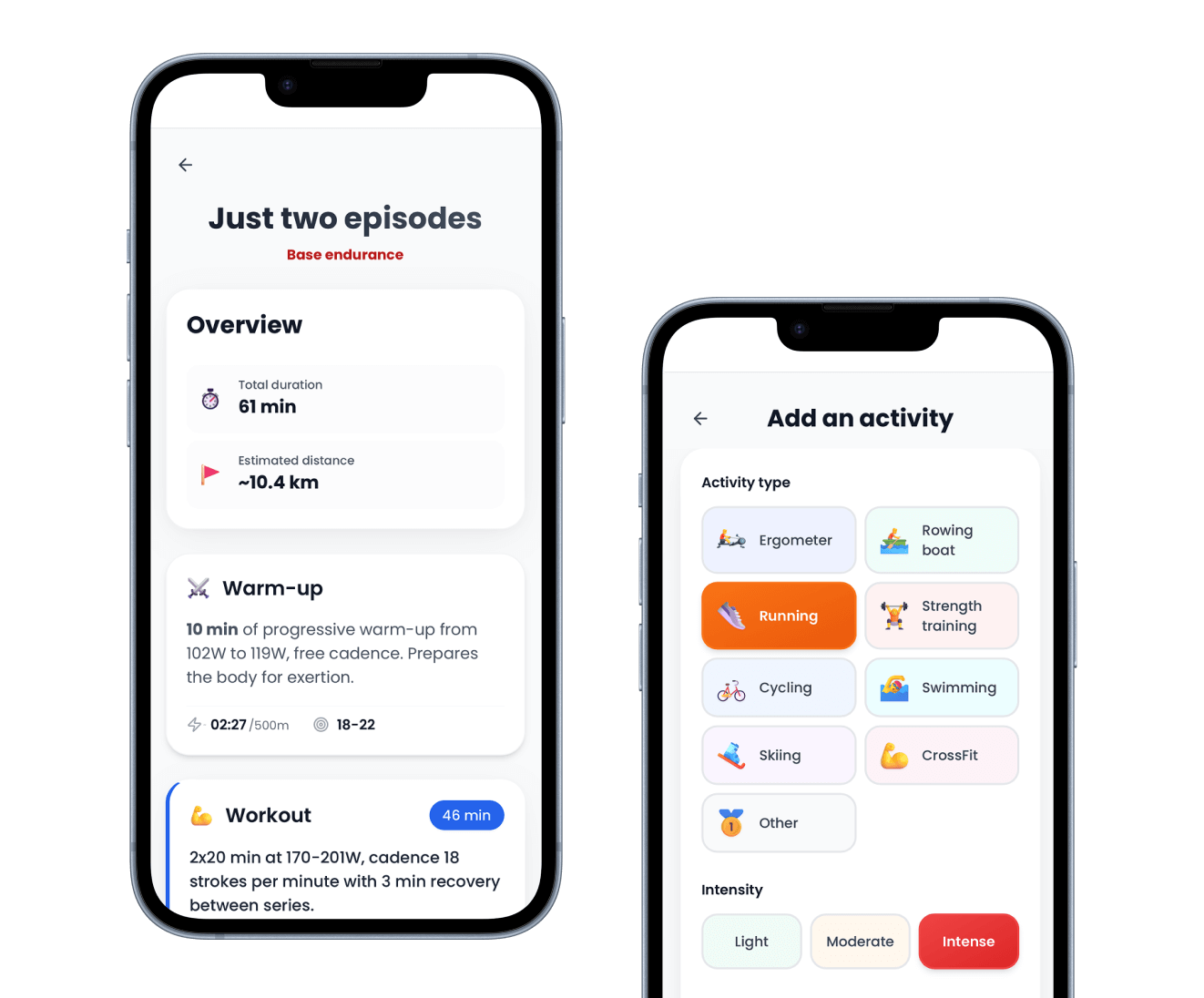
The app generates customized workouts derived from expert coaching programs, calculated specifically for your current fitness level.
Execution
Log your workouts. The app monitors your fatigue across sessions and adjusts upcoming training weeks to match how you actually feel.
Key decisions
Cutting scope
We stripped the product down strictly to goal setting, workout generation, and fatigue tracking. Focusing solely on the athlete loop enabled an end to end build in 25 hours.
Encoding expertise
We worked with champion rower and full-time coach Maxime Ducret to encode training principles, heart rate intensity zones, and race prep into software algorithms.
Adapting to recovery
Instead of tracking training volume blindly, the app monitors recovery across activities to recommend what to do next, adjusting to real life rather than static schedules.
Fast prototyping
We built directly in code using Cursor, Supabase, and Vercel instead of spending weeks in design software, testing the real product logic immediately.
Results
25 hour build
Rowers can set goals, receive tailored workouts, log training sessions, and track recovery in an early but complete beta app.
Workflow proof
Demonstrated that AI tools allow single builders to prototype complete products rapidly when guided by strong architecture and product vision.
Organic traction 20 days after release
Attracted 300+ active rowers with zero marketing spend, spread purely through word of mouth in rowing clubs.
Over 1,000 workouts logged by active athletes, confirming strong core engagement.
Athletes return week after week without push notifications, building a habit around structured training.
Retrospective
Building a working app in 25 hours changes everything. You learn from real athletes using the product immediately rather than over-engineering features on paper.
When coding becomes faster, it is easy to overbuild. Saying no to extra ideas beyond the core training loop was essential to launching a clean product.
AI tools generate code rapidly, but they do not replace product vision. Clean visual hierarchy, user experience design, and domain logic still require strong human judgment.